
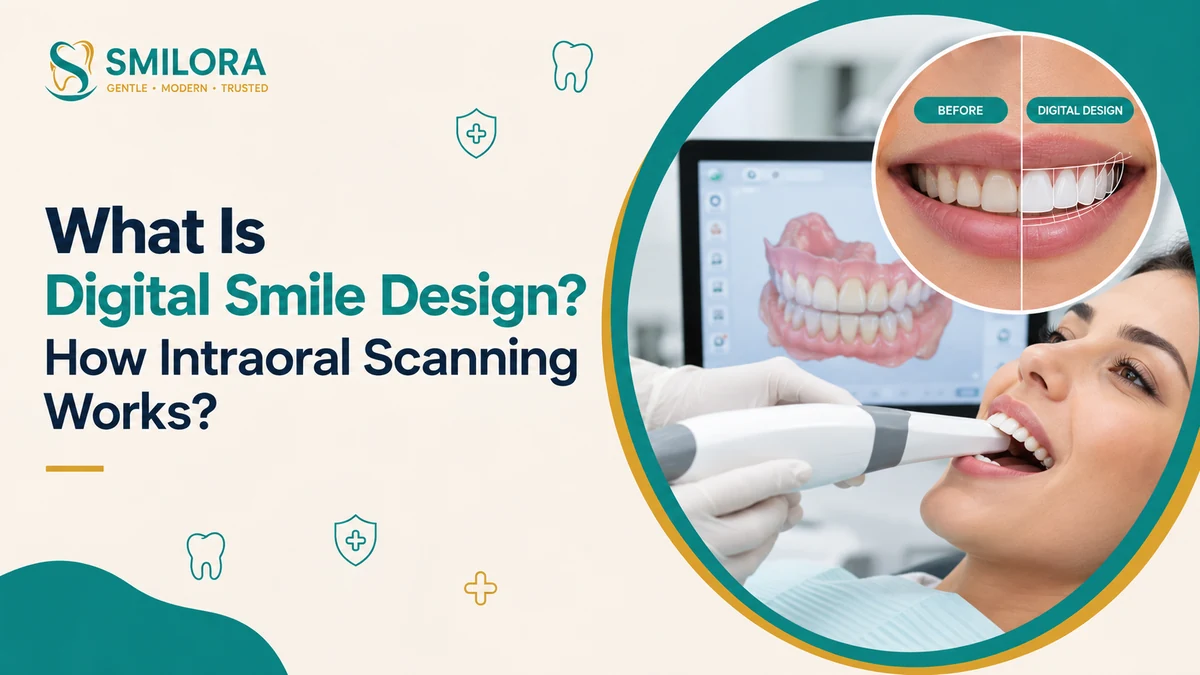
Imagine being able to preview your future smile before treatment even begins. That is where modern digital dentistry gets interesting! Digital Smile Design, or DSD, uses digital technology to plan cosmetic and restorative dental treatments around a patient’s facial features, teeth, and smile. One useful part of this process is intraoral scanning, which creates a detailed digital model of the mouth. Together, these tools can make treatment planning more visual, precise, and easier to understand.
Here’s All You Need To Know About Digital Smile Design!
1) What Is Digital Smile Design?
Digital Smile Design is a technology-assisted approach to planning a patient’s smile. Dentists can use photographs, videos, facial measurements, and digital dental records to study how the teeth relate to the lips and face. Instead of focusing only on individual teeth, the overall appearance of the smile is considered. The plan can then be used to discuss options such as veneers, crowns, orthodontic treatment, or other procedures.
2) Why Is DSD Useful?
One major advantage of DSD is that it helps patients become part of the planning process. Digital images and simulations can make proposed changes easier to visualise before treatment starts. Dentists can also evaluate proportions, tooth position, symmetry, and the way the smile fits the patient’s facial features. It does not guarantee that the final result will look exactly like a simulation, but it provides a helpful visual guide for communication and planning.
3) What Is An Intraoral Scanner?
An intraoral scanner is a small handheld device that captures images of the teeth and surrounding oral structures. Instead of using traditional impression material, the dentist moves the scanner around the mouth to collect many images. Special software combines these images to create a three-dimensional digital model. This process is generally quick and can be more comfortable for patients who dislike conventional impressions.
4) How Does Intraoral Scanning Work?
The scanning process is quite straightforward. The dentist gently moves the scanner over the teeth while its sensors capture detailed surface information. The software processes these images and builds a digital replica of the mouth on a computer screen. The dentist can then inspect the model, check the bite, plan restorations, and share the digital information with a dental laboratory when needed. Scans can also be stored for future reference.
5) How Do DSD And Scanning Work Together?
DSD and intraoral scanning can complement each other during treatment planning. The scanner provides an accurate digital model of the teeth, while photographs and other digital records help the dentist assess the smile in relation to the face. These different sources of information can be combined to develop a more personalised treatment plan. The result is a clearer workflow, better communication, and a more informed discussion between the dentist, laboratory team, and patient.
In Conclusion
Digital Smile Design brings a more visual approach to modern dental planning, while intraoral scanning replaces many traditional impressions with convenient digital models. Neither technology is simply about making dentistry look futuristic; both can improve communication and support careful treatment planning. If you are considering cosmetic or restorative treatment, asking your dentist about these technologies can help you understand what options may suit your smile and dental needs.
Better dental care is just a visit away — Choose Smilora!