
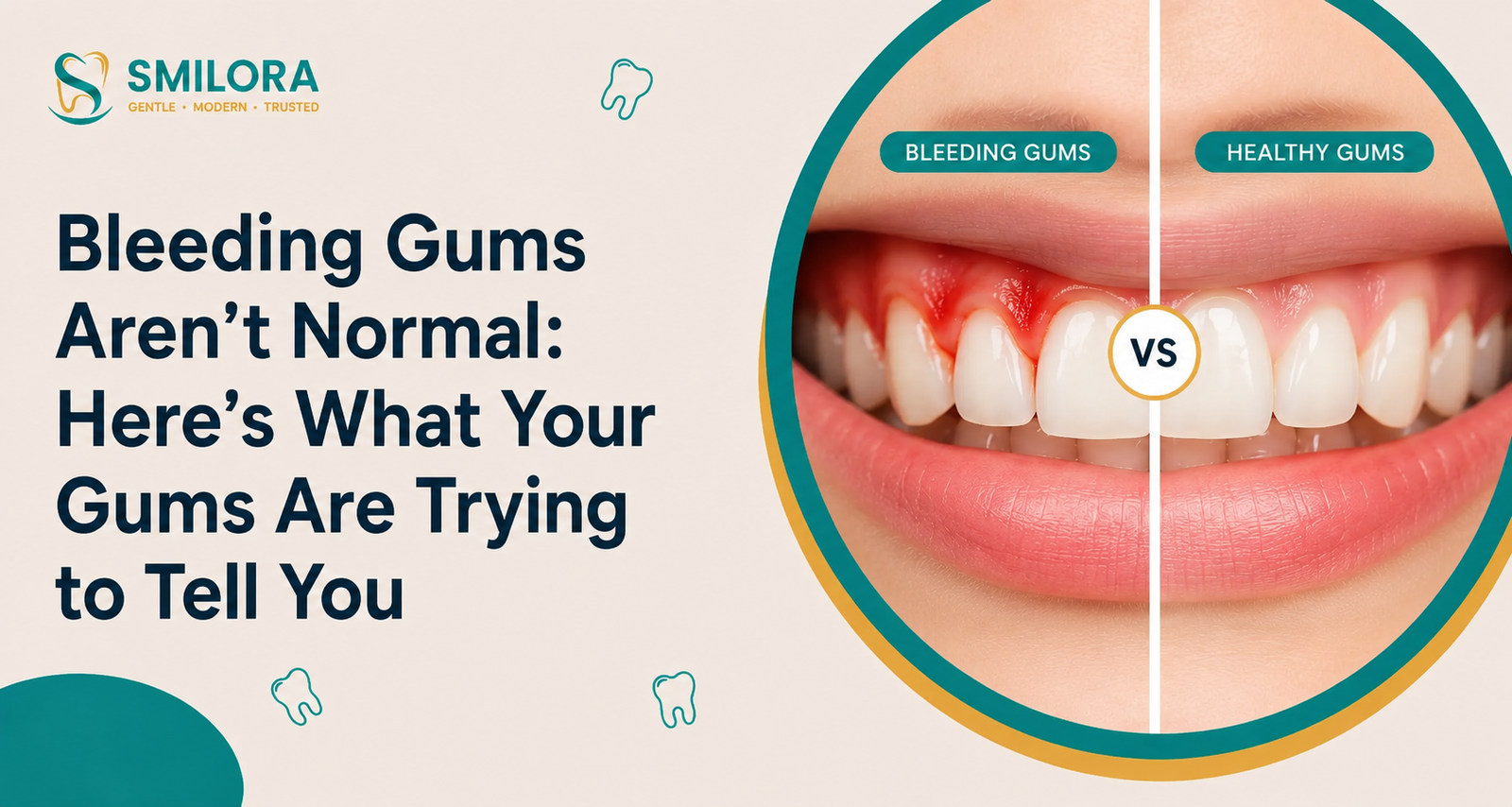
Most people wipe a little blood off their toothbrush and think nothing of it maybe they brushed too hard. But healthy gums don’t bleed. Not a little, not “just sometimes.” If you’re seeing pink in the sink, your gums are asking for help.
Bleeding gums are usually the earliest sign of gum disease (gingivitis), a bacterial infection caused by plaque buildup along the gumline. It’s painless at first, fully reversible with early treatment, but can progress to periodontitis and tooth loss if ignored.
This is one of the most common dental problems in India today, quietly affecting a large share of adults who don’t realise it’s happening. The tricky part is that it rarely hurts in the beginning. It just shows up as small, easy-to-miss signals — until one day it isn’t small anymore.
What Exactly Is Gum Disease?
Plaque is a sticky film that builds up on your teeth every day from food, saliva, and bacteria. Brushing and flossing usually clear it out. But when it’s missed repeatedly, it hardens into tartar, which brushing alone can’t remove. That’s when your gums start reacting — getting inflamed, tender, and irritated.
In the early stage, called gingivitis, the damage is completely reversible. Gums may look red or puffy and bleed when you brush, but nothing is structurally damaged yet.
Left untreated, it can progress to periodontitis, where the infection extends below the gumline and begins affecting the bone that holds your teeth in place. At this stage, damage isn’t fully reversible, and it can eventually lead to loose teeth or tooth loss.
Signs You Shouldn’t Brush Off
- Gums that bleed while brushing or flossing
- Redness, swelling, or tenderness along the gumline
- Bad breath that doesn’t go away even after brushing
- Gums that seem to be pulling away from your teeth
- Teeth that feel slightly loose or shifted
- A change in how your teeth fit together when you bite
Even one or two of these are worth getting checked — gum disease often doesn’t hurt until it’s already advanced, so waiting for pain isn’t a reliable strategy.
What Actually Causes It
Plaque buildup is the main trigger, but several factors make it worse:
- Skipping regular dental cleanings
- Smoking or chewing tobacco
- Diabetes, which lowers your body’s ability to fight gum infections
- Hormonal changes, especially during pregnancy
- Certain medications that reduce saliva flow
- Genetics — some people are simply more prone to it
How It’s Treated
Gum disease is very manageable when caught early, and treatment depends on how far it’s progressed.
For gingivitis, a professional cleaning combined with better daily brushing and flossing is often enough to reverse it completely.
For more advanced cases, your dentist may recommend scaling and root planing — a deep cleaning below the gumline that clears out bacteria and smooths the tooth root so gums can reattach properly. In more serious situations, additional procedures may be needed to restore gum and bone health.
The earlier it’s caught, the simpler and less invasive the treatment.
How to Keep Your Gums Healthy Going Forward
- Brush twice a day with gentle circular motions — scrubbing hard damages the gumline rather than protecting it
- Floss daily, since brushing alone misses the spaces between teeth
- Don’t skip your six-month dental check-up, even if nothing feels wrong
- Cut back on sugary snacks and drinks
- If you smoke, know it’s one of the biggest risk factors for gum disease
When to See a Dentist
If your gums bleed regularly, feel swollen, or your breath won’t freshen up no matter what you try, don’t wait for it to get worse. At Smilora Dental Clinic, Chembur, our dentists check for early signs of gum disease during every routine visit, so small issues get treated before they turn into bigger, costlier problems.
📍 Smilora Dental Clinic, Chembur, Mumbai
A simple check-up today could save you a much tougher treatment later.
Reviewed by [Dr. Binal Shah], BDS/MDS — Smilora Dental Clinic, Chembur
Frequently Asked Questions
Can bleeding gums heal on their own?
Mild bleeding from gingivitis can improve with better brushing and flossing, but a professional cleaning clears tartar that a toothbrush can’t reach — so recovery is faster and more complete with a dental visit.
Is gum disease reversible?
Gingivitis (the early stage) is fully reversible. Periodontitis (the advanced stage, where bone is affected) can be managed and stopped from progressing, but existing bone loss isn’t reversible.
How often should I get my teeth cleaned to prevent gum disease?
Every six months for most people. If you have diabetes, smoke, or already show early gum inflammation, your dentist may recommend more frequent cleanings.