
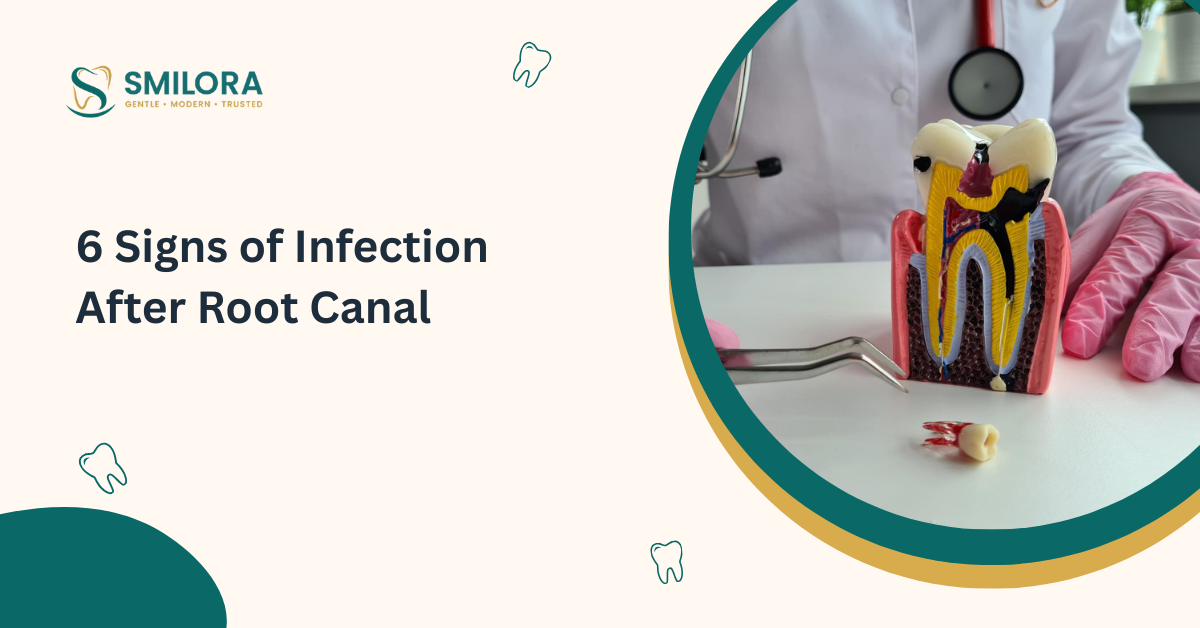
A root canal usually brings relief in the deep, throbbing pain that once made chewing impossible finally settles down. But sometimes, the story doesn’t end there. A few days or even weeks later, discomfort may happen again like sharper, strangely, and you can’t ignore this pain.
While little soreness is normal, persistent or worsening symptoms can point towards a root canal infection. These signs of early recognition can save a tooth and prevent bigger problems.
Key Signs of Infection After a Root Canal
Pain That Refuses to Go Away
A little tooth pain after root canal is expected. The tooth and surrounding tissue need time to heal. But if the pain lingers beyond a week or suddenly becomes intense, it could mean bacteria are still present.
Rakesh, a 34-year-old office worker, once described a dull ache that turned into electric shocks while sipping tea. He assumed healing was slow. A follow-up visit proved otherwise infection had developed beneath the filling.
Swelling Around the Treated Tooth
Notice puffiness near the gums or cheek? That’s not something to ignore. Swelling often indicates trapped infection. Sometimes it appears as a small bump or pimple on the gums, which may ooze fluid.
This bump can come and go, misleading many people into thinking the issue has resolved on its own. It hasn’t.
Sensitivity to Hot and Cold
Pain after root canal treatment is extremely sensitive and should gradually fade. If sipping cold water or biting into hot food triggers sharp discomfort weeks later, something may be wrong.
The nerves inside the tooth are removed during a root canal, so ongoing sensitivity often points to infection in surrounding tissues rather than inside the tooth itself.
Bad Taste or Unpleasant Odor
An unusual taste that won’t disappear even after brushing? That can signal pus draining from an infected area. Persistent bad breath tied to one specific tooth is another red flag.
Some people mistake it for a stomach issue or poor oral hygiene. The real cause might be sitting right in the gums.
Fever or General Fatigue
Though less common, advanced dental infections can trigger body-wide symptoms. Low-grade fever, tiredness, or swollen lymph nodes may appear.
This stage needs urgent care, because dental infections can spread if left untreated.
When to See a Dentist?
If pain worsens, swelling appears, or discomfort doesn’t improve within a week, a dental check-up is essential. Early treatment might involve cleaning the canal again, medication, or minor surgical procedures.
For proper diagnosis and safe treatment options, consulting experienced professionals is key. At Smilora Dental Clinic, patients receive personalized care using modern techniques to manage root canal complications effectively and comfortably.
Ignoring symptoms never makes them disappear. Listening to your teeth and acting early will make all the difference. Book the appointment with us today!