
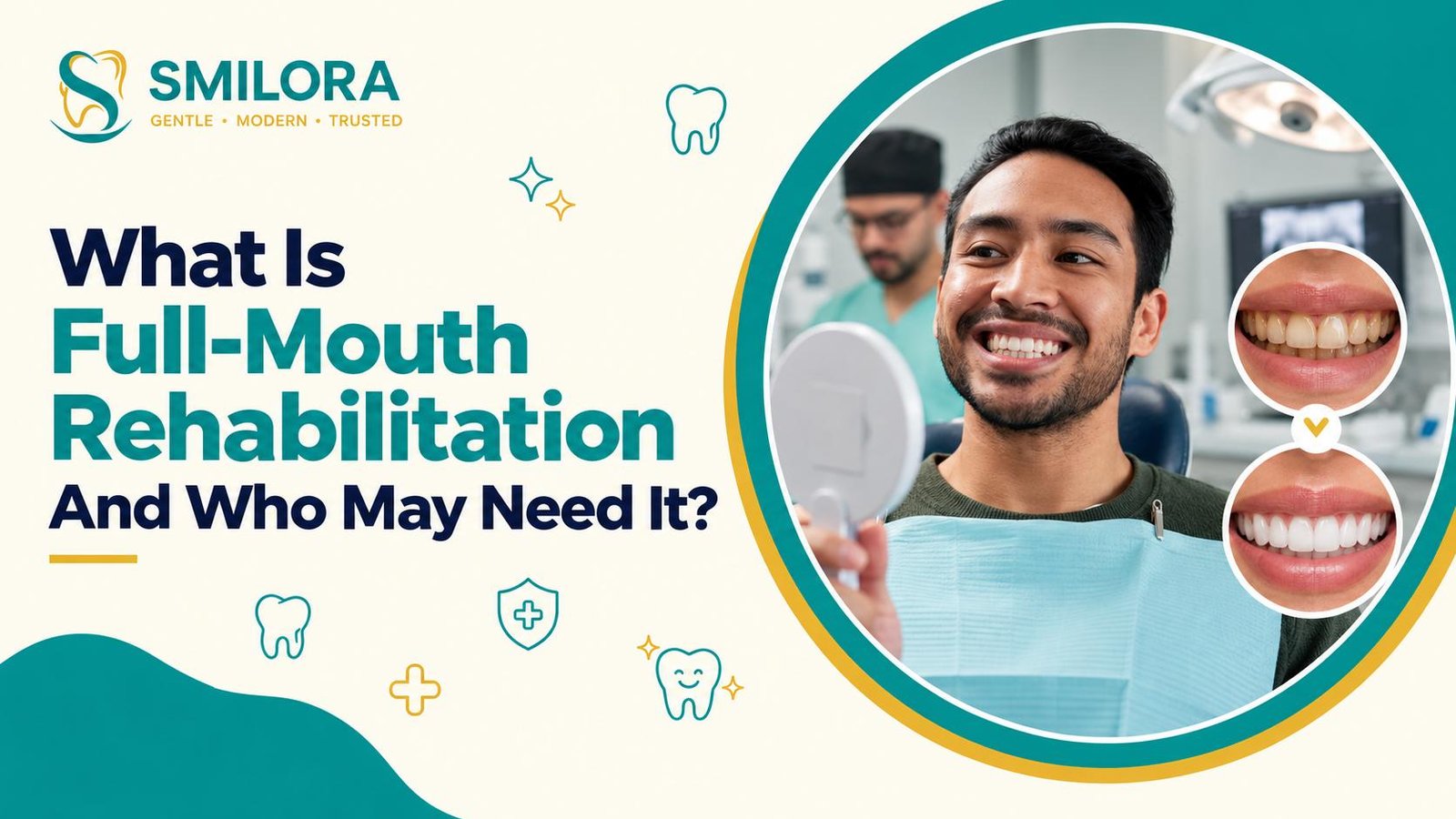
Eating your favourite food, speaking comfortably, and smiling without hesitation are things we often take for granted until dental problems get in the way. When several teeth need attention, treating each issue separately may not be enough. This is where full-mouth rehabilitation comes in! It combines different dental treatments to restore the health, function, and appearance of your teeth. But who needs it, what does it involve, and how can it help? Let’s break it down.
1) What Exactly Is Full-Mouth Rehabilitation?
Think of it as a complete plan to rebuild your oral health, rather than just fixing one tooth. Full-mouth rehabilitation involves combining restorative and, when needed, cosmetic dental procedures to address multiple problems affecting your teeth, gums, and bite. Depending on your condition, treatment may include crowns, bridges, dental implants, fillings, or other suitable procedures. Your dentist creates a personalised plan after examining your mouth and identifying the issues that need attention.
2) Who May Need Full-Mouth Rehabilitation?
Not everyone needs extensive dental treatment, but some people benefit from a comprehensive approach. You may be a candidate if you have several missing or severely damaged teeth, extensive tooth decay, worn-down teeth, or difficulties chewing. People with significant bite problems or dental damage from grinding may also need an assessment. Full-mouth rehabilitation is recommended according to individual needs, so a thorough dental examination is essential before deciding on treatment.
3) What Dental Problems Can It Address?
Multiple dental concerns can affect your comfort and confidence at the same time. Extensive cavities, fractured teeth, worn enamel, missing teeth, and certain bite irregularities may require coordinated treatment. Depending on the underlying problem, your dentist might recommend fillings to repair decay, crowns to protect weakened teeth, or implants and bridges to replace missing teeth. Gum disease may also need treatment before restorative procedures begin. Addressing these concerns together helps create a more functional, balanced smile.
4) How Does the Treatment Process Work?
The journey begins with a detailed dental examination, which may include X-rays, digital scans, photographs, and bite assessments. Your dentist then develops a treatment plan based on your oral health, priorities, and budget. Any active gum disease or infection usually needs attention first. Next, restorative procedures are scheduled in a suitable order, sometimes across multiple appointments. Regular follow-ups help your dentist monitor healing, check your bite, and ensure the restorations function properly.
5) What Benefits Can You Expect?
The main goal is to improve everyday comfort while protecting your long-term oral health. Full-mouth rehabilitation can help restore chewing ability, improve speech affected by missing teeth, protect weakened teeth, and create a more balanced smile. Results depend on your dental condition, the procedures performed, and how well you maintain your oral hygiene. Regular check-ups, careful brushing, flossing, and following your dentist’s advice help protect your restorations and support lasting results.
In Conclusion
Dental problems can affect much more than your smile, especially when several concerns occur together. Full-mouth rehabilitation offers a coordinated approach to restoring dental function, comfort, and appearance. If you experience persistent discomfort, difficulty chewing, or multiple damaged or missing teeth, consult a qualified dentist. A personalised assessment can help determine the most suitable treatment plan for your needs.
Dental Care That Puts You First. Choose Smilora!