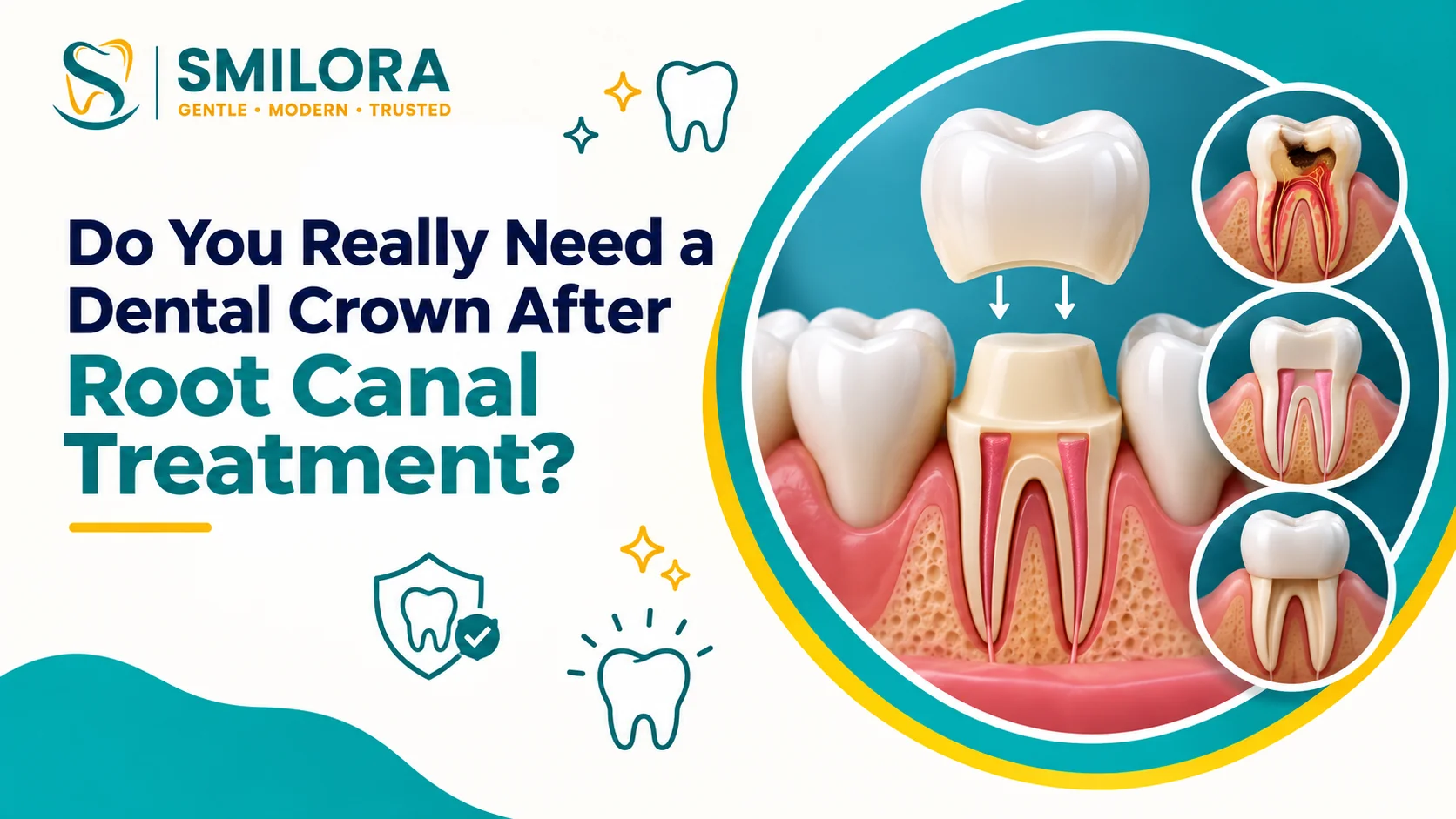
Getting a root canal can bring a huge sense of relief, especially when you’ve been dealing with a painful tooth for days. But once the treatment is complete, your dentist might recommend placing a dental crown over the tooth. This often leaves patients wondering if another procedure is really necessary. The reason is simple: a root canal removes infected pulp, but the treated tooth may become more vulnerable to fractures. That’s where dental crowns in Chembur can make a difference by providing additional support and protection.
1) Why Does A Tooth Become Weaker After A Root Canal?
A tooth that needs root canal treatment has usually experienced significant decay, damage or infection. During the procedure, the infected pulp is removed, and the inside of the tooth is cleaned and sealed. Although this saves the natural tooth, it doesn’t restore all the structure already lost to decay or damage. A tooth with large cavities or previous fillings may become more fragile, making it harder to handle everyday chewing pressure without additional protection.
2) How Does A Dental Crown Protect Your Tooth?
Think of a dental crown as a protective cover that fits over the visible part of your treated tooth. It helps hold the remaining tooth structure together and reduces the risk of fractures during normal chewing. Crowns are available in different materials, including ceramic, porcelain-fused-to-metal and zirconia. Your dentist can recommend a suitable option based on the tooth’s position, remaining structure, bite and appearance. This makes dental crowns in Chembur a useful treatment option for restoring strength and function.
3) Does Every Root Canal Require A Crown?
Not necessarily! The need for a crown depends on how much natural tooth structure remains after treatment. Back teeth, such as molars and premolars, generally experience greater chewing forces and often benefit from full coverage. Some front teeth may not require a crown if they have sufficient healthy structure remaining. In certain cases, a suitable filling or another restoration may be enough. Your dentist will assess the tooth before recommending the most appropriate option.
4) What Happens If You Skip The Recommended Crown?
Leaving a weakened tooth without adequate protection can increase its chances of cracking or breaking. A small fracture may cause discomfort, while a severe break can make the tooth difficult or impossible to restore. You might also experience problems while biting or chewing. Although not every untreated tooth will fracture, delaying a recommended restoration can put the results of your root canal at risk. Getting the final restoration completed on time helps protect your investment in dental care.
5) When Should You Get A Crown After Treatment?
Your dentist will usually plan the final restoration after completing the root canal and assessing the tooth’s condition. In many cases, a permanent crown is placed after a temporary filling or restoration. However, the exact timing depends on the tooth, infection status and treatment plan. If you’re undergoing root canal treatment in Chembur, ask your dentist about the recommended restoration and how soon it should be completed. Avoid putting unnecessary pressure on the treated tooth until it receives adequate protection.
In Conclusion
A dental crown isn’t automatically necessary after every root canal, but it can be important for protecting teeth that have lost significant structure. The right restoration depends on the tooth’s condition, location and remaining strength. Discuss your options with your dentist and don’t delay the final restoration if it’s recommended. With proper care, regular check-ups and good oral hygiene, you can help your treated tooth stay comfortable and functional for years to come.
Experience Comfortable, Modern Dental Care With Smilora Today!