
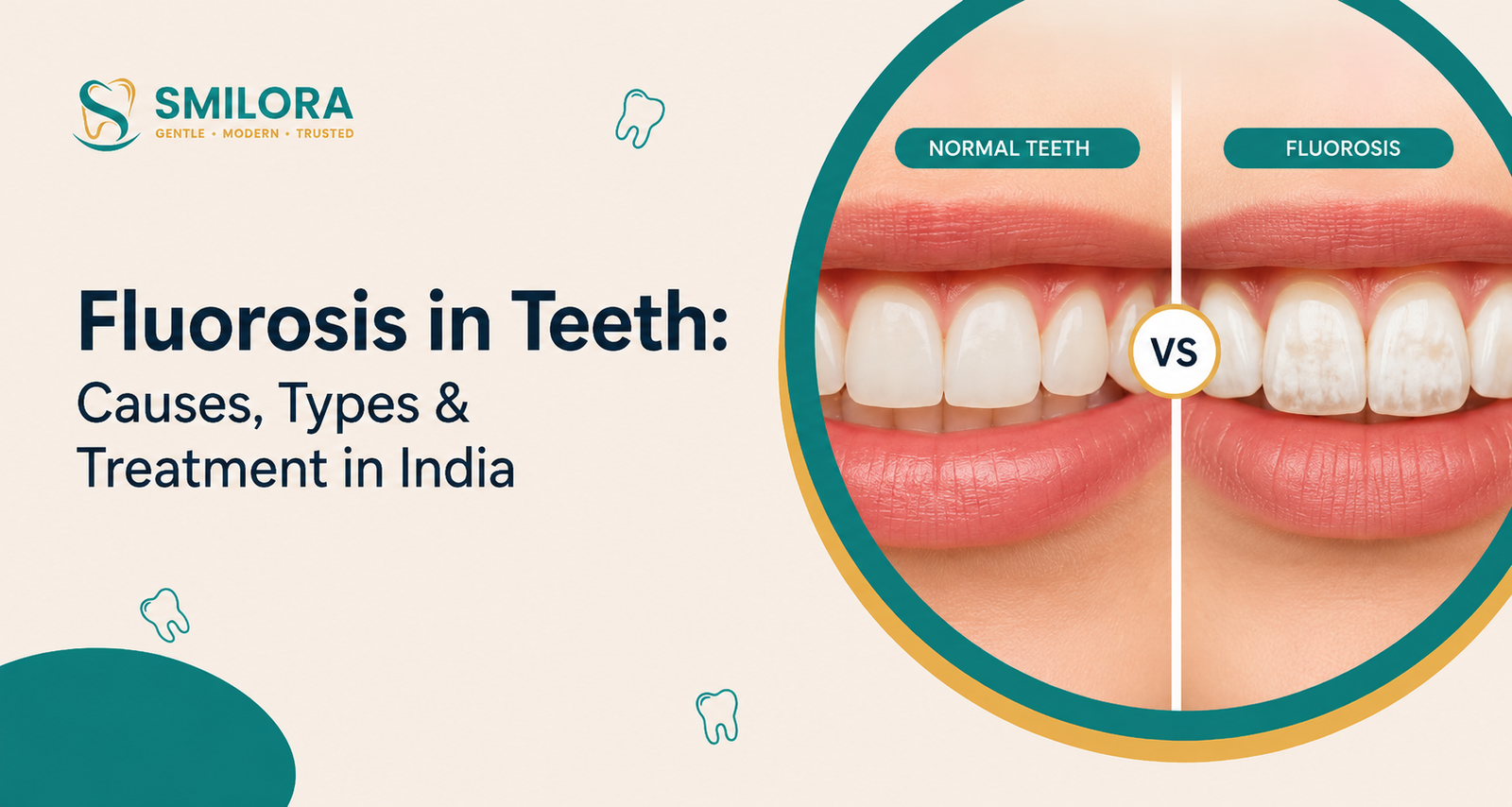
White streaks on teeth may seem harmless at first. Sometimes they’re barely noticeable. Other times, they appear as brown stains, rough patches, or discoloration that affects a person’s confidence. One of the most common reasons behind these changes is Dental Fluorosis Treatment in India, a topic that has gained increasing attention as awareness about oral health continues to grow.
Fluorosis develops when a child consumes excessive fluoride while permanent teeth are still forming beneath the gums. Once the teeth erupt, the effects become visible and remain unless treated.
What Causes Dental Fluorosis?
Fluoride is beneficial in the right amount. It helps strengthen tooth enamel and lowers the risk of cavities. Problems begin when fluoride intake exceeds recommended levels during childhood.
Common causes include:
- Drinking water with high fluoride content
- Swallowing fluoride toothpaste regularly as a child
- Excessive use of fluoride supplements
- Exposure to multiple fluoride sources over time
In several parts of India, naturally occurring fluoride levels in groundwater can be significantly higher than normal, making fluorosis more common in certain regions.
Types of Dental Fluorosis
The severity of fluorosis can vary from person to person.
Mild Fluorosis
This is the most common form. Teeth may develop small white lines, spots, or faint patches that are often noticeable only upon close inspection.
Moderate Fluorosis
White patches become more prominent and may spread across larger portions of the teeth. The appearance of the smile may begin to concern patients.
Severe Fluorosis
In advanced cases, teeth can develop brown stains, surface irregularities, pits, and enamel damage. These changes often affect both aesthetics and confidence.
How Is Fluorosis Diagnosed?
A dentist usually identifies fluorosis through a clinical examination. The pattern of discoloration, patient history, and the distribution of stains help distinguish fluorosis from other dental conditions.
In some situations, digital imaging or additional diagnostic tests may be recommended to evaluate the extent of enamel changes.
Treatment Options Available in India
The good news is that several modern treatments can improve the appearance of fluorosis-affected teeth.
Teeth Whitening
For mild cases, professional whitening procedures may help reduce the visibility of discoloration and improve overall tooth appearance.
Microabrasion
This technique removes a thin layer of affected enamel, making superficial white spots and stains less noticeable.
Dental Bonding
Tooth-colored composite materials can be applied to mask visible imperfections and create a more uniform smile.
Veneers
For moderate to severe fluorosis, porcelain veneers offer a long-lasting cosmetic solution by covering the front surface of the teeth.
Crowns
In cases where fluorosis has caused significant enamel damage, crowns may be recommended to restore both appearance and function.
Today, Dental Fluorosis Treatment in India includes advanced cosmetic and restorative procedures that can dramatically improve smile aesthetics while preserving natural tooth structure whenever possible.
Can Fluorosis Be Prevented?
Yes. Prevention mainly involves monitoring fluoride exposure during childhood.
Parents should:
- Use age-appropriate amounts of toothpaste
- Supervise brushing habits
- Avoid unnecessary fluoride supplements
- Test drinking water in high-fluoride regions when needed
Early awareness can significantly reduce the risk of developing fluorosis.
Restore Your Smile with Smilora
At Smilora, we understand that dental discoloration can impact more than just appearance, it can affect confidence, self-esteem, and everyday interactions. Led by Dr. Binal Shah, with over 15 years of experience, our clinic provides personalized solutions for fluorosis and other cosmetic dental concerns.
Using advanced technology, precise treatment planning, and a patient-first approach, we help individuals achieve healthier, brighter smiles in a comfortable and stress-free environment. If you’re considering Dental Fluorosis Treatment in India, Smilora offers expert guidance and customized care designed to deliver natural-looking, lasting results.
Crafting Confident Smiles with Expert Dentist in Chembur, Smilora combines modern dentistry with compassionate care to help every patient smile with confidence.
FAQ’s
What causes dental fluorosis?
Dental fluorosis is caused by consuming excessive fluoride while permanent teeth are still forming beneath the gums. Common sources include high-fluoride drinking water, swallowing fluoride toothpaste as a child, excessive fluoride supplements, and exposure to multiple fluoride sources during childhood.
What are the different types of dental fluorosis?
Dental fluorosis is classified into three types based on severity: mild fluorosis (small white lines or spots, often only visible on close inspection), moderate fluorosis (more prominent white patches across larger portions of the teeth), and severe fluorosis (brown stains, pitting, and enamel damage).
What is the best treatment for dental fluorosis?
Treatment for dental fluorosis depends on severity. Mild cases are often treated with professional teeth whitening or microabrasion, which removes a thin layer of affected enamel. Moderate to severe cases are typically treated with dental bonding, porcelain veneers, or dental crowns to restore the appearance and structure of the teeth.
Can dental fluorosis be prevented?
Yes, dental fluorosis can be prevented by monitoring a child’s fluoride intake. This includes using only age-appropriate amounts of toothpaste, supervising brushing to prevent swallowing, avoiding unnecessary fluoride supplements, and testing drinking water for fluoride levels in high-fluoride regions.
Is dental fluorosis permanent?
Dental fluorosis is permanent once teeth have erupted, as the discoloration occurs during enamel formation. However, its visible effects can be effectively treated and significantly improved using cosmetic procedures such as whitening, bonding, veneers, or crowns.