
Let’s start with an example: Once a girl covered her mouth every time she laughed. Not because she was shy, she simply hated the tiny chip on her front tooth and the uneven edges that showed up in photos.
One afternoon she said, “I just want my smile to look normal.” Nothing extra but just smoother, brighter, a little more balanced.
That’s when the conversation about cosmetic dental treatments started. Two options came up quickly: composite bonding and veneers. Both can transform a smile, but they work in slightly different ways and choosing the right one depends on your goals, budget, and the condition of your teeth.
What Is Composite Bonding?
Composite bonding is one of the simplest cosmetic dental treatments available.
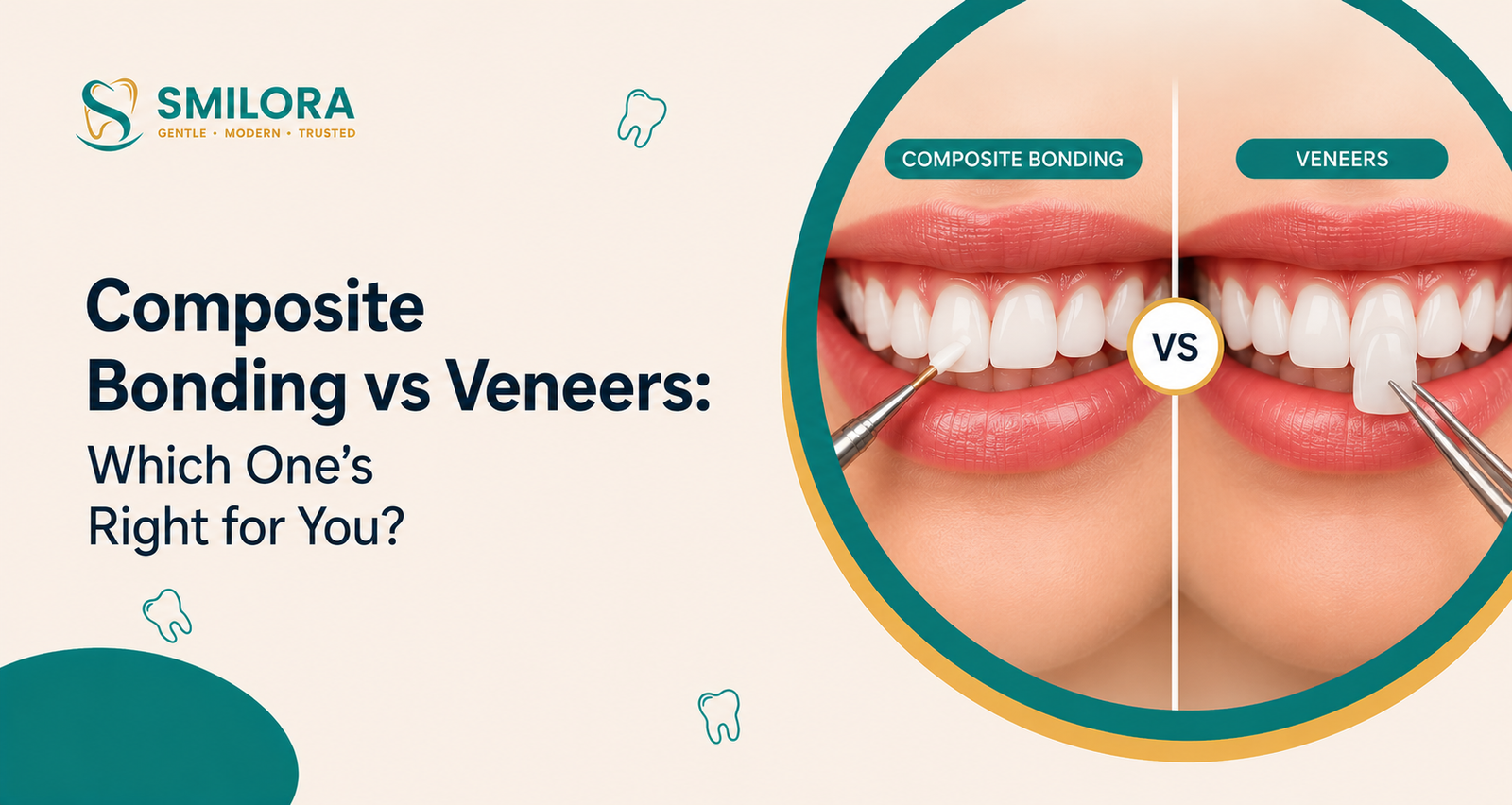
Dentists apply a tooth-colored resin directly onto the tooth, sculpt it carefully, and then harden it using a special curing light. The process feels a bit like a tiny art project. The dentist shapes and smooths the material until it blends naturally with your existing teeth.
Bonding works well for small chips, gaps, minor discoloration, or uneven edges.
Most appointments take about 30–60 minutes per tooth, and in many cases no drilling or anesthesia is required. It’s quick, relatively affordable, and often completed in a single visit.
The trade-off? Composite material isn’t as durable as porcelain. It can stain or wear down over time, especially if you drink a lot of coffee or bite into hard foods. At that point, some patients explore teeth whitening alongside bonding to keep the overall smile looking fresh and consistent.
What Are Veneers?
Veneers are thin porcelain shells placed over the front surface of teeth. Think of them as custom-designed covers that instantly change the shape, color, and alignment of your smile.
People looking for a long-term cosmetic dentistry treatment often choose veneers because they are stronger and more stain-resistant than bonding.
The process usually takes two visits. During the first appointment, the dentist prepares the tooth and takes impressions. Then a dental lab creates custom porcelain veneers that fit perfectly.
Once placed, veneers can last 10–15 years or even longer with proper care.
They’re incredibly natural-looking too. That “perfect smile” you see in many celebrity photos? Veneers are often the secret behind it.
Key Differences to Think About
Composite bonding and veneers both improve the appearance of teeth, but they suit different situations.
Bonding is usually better for small fixes. A chipped tooth, minor gaps, slightly uneven edges, these are ideal bonding cases.
Veneers, on the other hand, work best when someone wants a more dramatic change. They can reshape multiple teeth at once, correct deeper discoloration, and create a more uniform smile.
Cost is another factor. Bonding is generally more affordable upfront, while veneers cost more but last longer.
Complete Dental Care for Every Smile
Every smile has its own story. Some people want small improvements, while others are ready for a full smile makeover. At Smilora, cosmetic dentistry treatment plans are designed to match each individual’s needs and expectations.
Each person has a different smile story. At Smilora, we plan treatments that make your smile one people will remember. Regardless of how your smile curves, our comprehensive dental solutions ensure health, beauty, and confidence.