
Most people notice it accidentally, while you’re brushing one morning, run your tongue along the back of your teeth, and something feels… rough. Not exactly painful. Just a stubborn little ridge that wasn’t there before.
Brushing harder doesn’t help. Mouthwash doesn’t help either. That rough layer just sits there quietly, collecting stains from tea, coffee, and everyday meals.
That’s dental tartar. And once it forms, it behaves very differently from normal plaque.
What Exactly Is Dental Tartar?
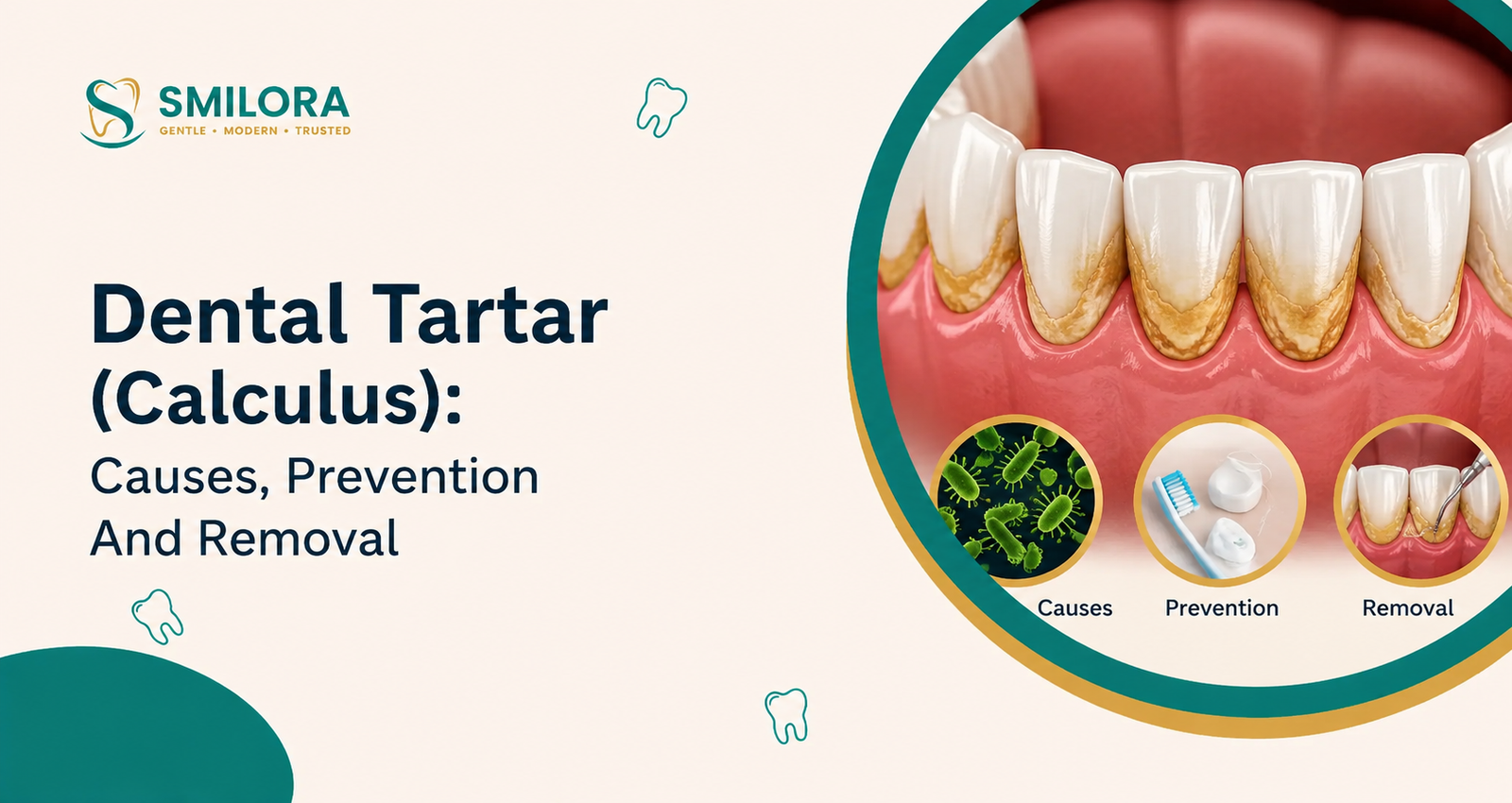
Tartar, also called calculus, forms when soft plaque hardens on the teeth over time. Plaque itself is a sticky film made of bacteria, food particles, and saliva. It develops naturally after eating.
If plaque isn’t removed through regular brushing and flossing, minerals from saliva slowly harden it into tartar.
That’s when things change.
Unlike plaque, tartar can’t be removed with a toothbrush. It sticks firmly to the tooth surface and often appears as yellow, brown, or even slightly dark deposits near the gum line.
When patients visit Smilora, dentists frequently recommend a tartar removal dental cleaning to safely remove these hardened deposits before they start causing bigger problems.
Tartar or Calculus — Is There a Difference?
Short answer: no. “Tartar” and “dental calculus” are two names for the exact same thing — hardened plaque. Dentists use “calculus” in clinical notes; “tartar” is just the everyday word for it. If you’ve seen both terms and wondered which one applies to you, the answer is: both do.
Not All Tartar Looks the Same
Tartar above the gumline (supragingival) is usually yellow or tan and easy to spot when you smile. Tartar that forms below the gumline (subgingival) is a different story — it’s typically dark brown or black, denser, and often invisible until a dentist checks with a probe or the gums recede. Both types need professional removal; the darker, below-the-gum kind is usually the more stubborn one and a stronger sign it’s time for a cleaning.
What Causes Tartar to Build Up?
Tartar doesn’t appear overnight. It builds slowly, often without people noticing.
Several everyday habits make tartar more likely to form:
- Skipping flossing
- Inconsistent brushing routines
- Drinking lots of tea, coffee, or sugary beverages
- Smoking or tobacco use
- Crowded teeth that trap plaque easily
A dentist once explained it in a simple way to a patient:
“Plaque is like wet cement. If you clean it quickly, it disappears. Leave it long enough, and it hardens.”
That’s exactly how tartar develops.
Why Tartar Is a Problem?
Tartar itself isn’t just a cosmetic issue. It creates a rough surface where bacteria can thrive.
Over time, that bacteria irritates the gums, leading to redness, swelling, and bleeding while brushing. This early stage of gum disease is called gingivitis.
If ignored, the irritation can progress into more serious gum problems that affect the bone supporting your teeth and may eventually require more comprehensive care like full mouth rehabilitation.
Many people only realize something is wrong when their gums start bleeding regularly.
How Dentists Remove Tartar
Once tartar forms, professional cleaning is the only safe way to remove it.
Dentists use specialized instruments or ultrasonic tools to gently break apart and remove the hardened deposits from the teeth and gum line. The process is called scaling.
Patients often worry it might hurt. In reality, most cleanings feel more like pressure than pain.
And the difference afterward? Immediate. Teeth feel smooth again, and gums start recovering within days.
Complete Dental Care for Every Smile
Every smile has its own story. Some people need help removing tartar, others want straighter teeth or brighter smiles. At Smilora, dental care is designed to match those individual needs. Each person has a different smile story.
At Smilora, we plan tartar removal dental cleaning treatments that make your smile one people will remember. Whether you need a routine cleaning or a complete smile design, our comprehensive dental solutions ensure health, beauty, and confidence.