
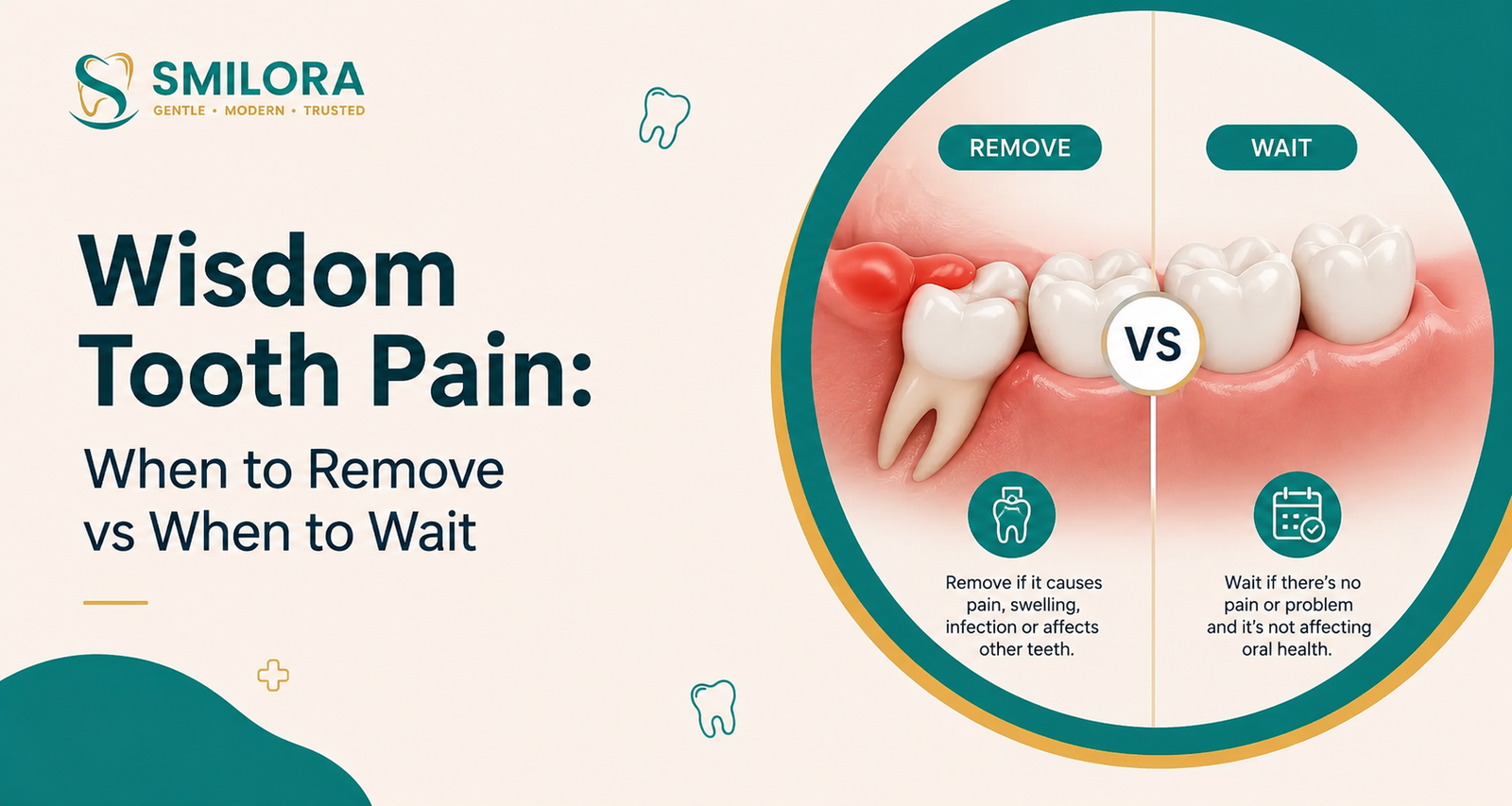
A dull ache at the back of your jaw. Tender gums. Maybe even a headache that seems to come out of nowhere. For many people, that’s how wisdom tooth trouble begins.
The tricky part? Not every wisdom tooth needs to be removed. Wisdom teeth aren’t always a problem, but when they are, delaying treatment can make things worse.
Why Wisdom Teeth Cause Problems
Wisdom teeth are the last set of molars to appear, usually between the ages of 17 and 25. By that time, many mouths simply don’t have enough room for them.
When a wisdom tooth tries to erupt without sufficient space, it may become impacted, meaning it’s trapped beneath the gums or grows at an awkward angle. That’s when pain, swelling, and infection often enter the picture.
Common signs include:
- Persistent pain at the back of the mouth
- Swollen or bleeding gums
- Jaw stiffness
- Difficulty chewing
- Bad breath or an unpleasant taste
- Frequent headaches around the jaw area
When It Makes Sense to Wait
Not every wisdom tooth is a ticking time bomb.
Some wisdom teeth grow in perfectly straight, remain healthy, and don’t affect surrounding teeth. In these situations, your dentist may simply monitor them during routine checkups.
Waiting can be a reasonable option if:
- The tooth has fully erupted
- There is no pain or infection
- It can be cleaned properly
- X-rays show no risk to neighboring teeth
A patient might go years without any issues. Regular dental examinations help ensure things stay that way.
When Removal Is Usually the Better Choice
There are times when removing a wisdom tooth becomes the safest option.
Dentists often recommend extraction when:
- Repeated infections occur
- The tooth damages nearby teeth
- Cysts develop around the tooth
- Severe crowding affects alignment
- Persistent pain keeps returning
Sometimes, acting early prevents bigger complications down the road.
Don’t Ignore the Warning Signs
Many people try to manage wisdom tooth pain with painkillers, hoping it will pass. Temporary relief can be helpful, but it doesn’t solve the underlying issue.
If pain keeps returning, worsens while chewing, or is accompanied by swelling or fever, it’s time to visit a dentist. A simple examination and X-ray can reveal whether removal is necessary or if monitoring is enough.
A Similar Lesson From Orthodontic Care
The same idea applies to modern dental treatments. I remember imagining how difficult teeth straightening would be if I ever needed it. Metal braces seemed uncomfortable and restrictive. Then I learned about invisible aligners. A first-time user might be surprised by how seamlessly they fit into daily life. You remove them while eating, clean them easily, and continue your routine with minimal disruption. Sometimes dental solutions sound intimidating until you experience how simple they can actually be.
Complete Dental Care for Every Smile
Every smile has its own story, and every wisdom tooth situation is different. At Smilora, we believe treatment should never be one-size-fits-all. Our team carefully evaluates your oral health and recommends whether removing a wisdom tooth or monitoring it is the better choice for your long-term comfort and wellbeing.