
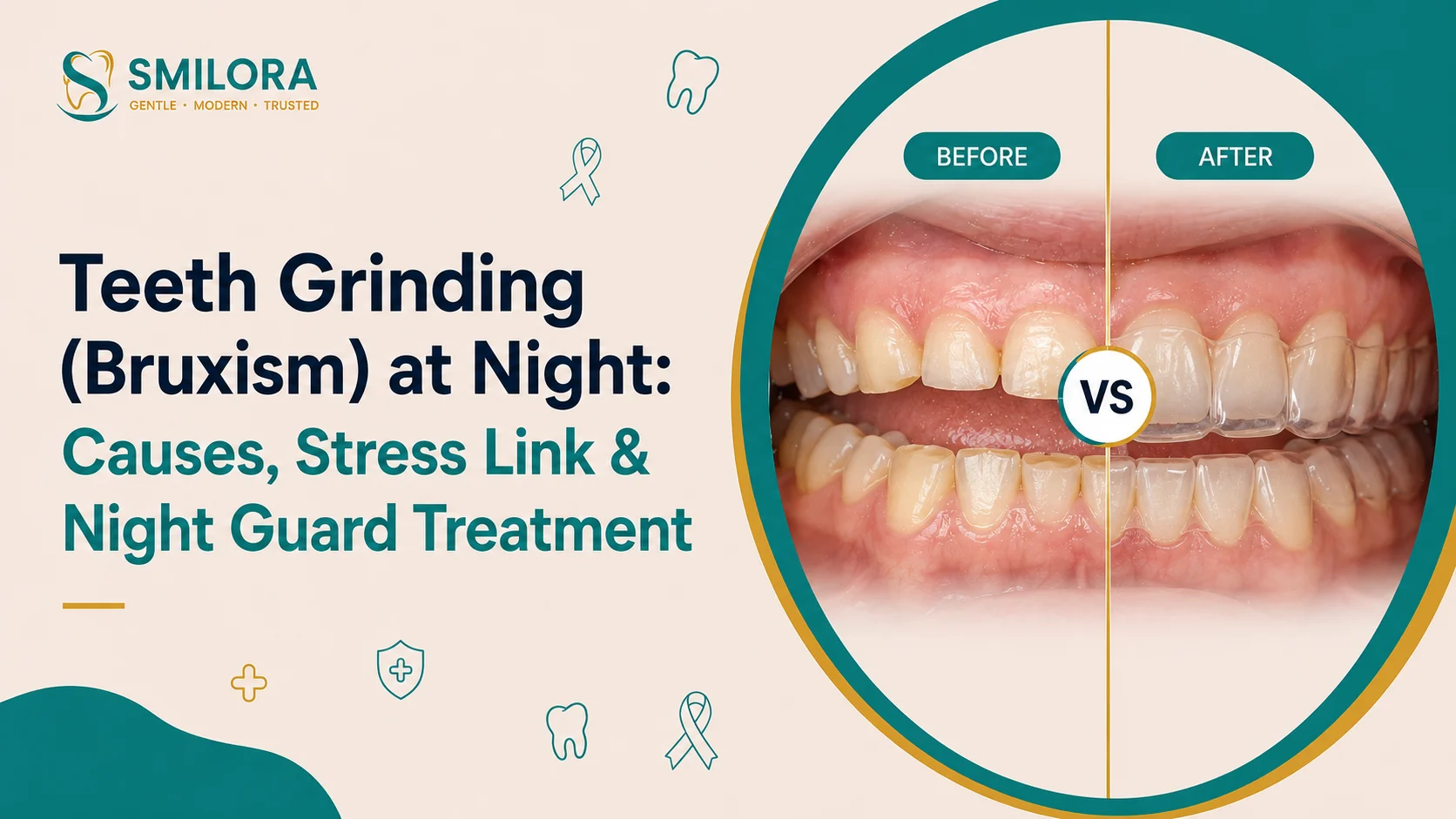
Do you wake up with a tight jaw, sensitive teeth or a dull headache around your temples even though you felt fine when you went to bed? You could be clenching or grinding your teeth while sleeping without knowing it.
This condition is known as sleep bruxism, or nighttime teeth grinding. It happens involuntarily during sleep and may range from occasional clenching that causes no major problems to repeated grinding that gradually wears down teeth, strains the jaw muscles and damages dental work.
Stress is one common factor, but it is not the only possible reason. Sleep problems, certain medicines, caffeine, alcohol, smoking and other individual factors may also contribute.
The important thing to understand is that managing bruxism is not simply about telling yourself to “stop grinding.” Because it happens while you are asleep, treatment usually focuses on identifying contributing factors, protecting your teeth and treating any pain or dental damage that has already developed.
What Is Sleep Bruxism?
Bruxism means involuntarily clenching, grinding or rubbing your teeth together.
There are two main forms.
Awake bruxism happens while you are conscious. You may notice yourself tightening your jaw while working, driving, concentrating or feeling stressed.
Sleep bruxism happens while you are asleep. Because you are unaware of the movement, you may only discover it after someone hears you grinding or your dentist notices signs of wear on your teeth.
Sleep bruxism does not necessarily happen continuously throughout the night. Grinding and clenching can occur in episodes, which means you may have symptoms even if your partner has never heard you grinding.
How Can You Tell If You Grind Your Teeth at Night?
Many people first notice the effects of bruxism in the morning rather than the grinding itself.
Common signs include:
- A sore, tight or tired jaw after waking
- Morning headaches, particularly around the temples
- Tooth sensitivity
- Flattened or visibly worn teeth
- Chipped or cracked enamel
- Broken fillings, crowns or other dental restorations
- Facial or neck soreness
- Clicking or discomfort around the jaw joint
- Difficulty opening your mouth comfortably
- Grinding noises noticed by a sleeping partner
One symptom alone does not automatically mean you have bruxism. Persistent or recurring symptoms deserve a dental evaluation because similar discomfort can sometimes come from other dental or jaw conditions.
Why Do I Grind My Teeth at Night?
There is usually no single answer.
Sleep bruxism is considered a multifactorial condition. This means several physical, psychological, sleep-related and lifestyle factors may be involved rather than one specific cause.
Stress and Anxiety
Stress is one of the most commonly discussed links with clenching and grinding.
During stressful periods, many people unconsciously tighten their facial and jaw muscles. You may notice yourself pressing your teeth together when you are concentrating, working under pressure or feeling anxious.
For some people, increased tension may also be associated with nighttime grinding.
This is why patients sometimes notice that jaw soreness and morning headaches become worse during demanding periods at work, exams, major life changes or periods of poor sleep.
However, it is important not to assume that every case of sleep bruxism is caused by stress. If symptoms continue even when you feel relaxed, other contributing factors should also be considered.
Is Teeth Grinding Connected to Sleep Problems?
It can be.
Sleep bruxism has been associated with sleep disturbances, including snoring and obstructive sleep apnea.
That does not mean everyone who grinds their teeth has sleep apnea. It does mean that sleep-related symptoms should not be ignored.
Tell your dentist or doctor if nighttime grinding happens together with:
- Loud or persistent snoring
- Waking up choking or gasping
- Breathing pauses noticed by your partner
- Persistent morning headaches
- Dry mouth after waking
- Excessive daytime sleepiness
- Feeling unrefreshed despite sleeping for several hours
If a significant sleep problem is suspected, your dentist may recommend discussing it with a physician or sleep specialist rather than treating the teeth alone.
Can Caffeine or Alcohol Make Bruxism Worse?
Lifestyle habits may influence bruxism in some people.
High caffeine consumption, particularly later in the day, can interfere with sleep and increase nervous-system stimulation. Alcohol may also disturb normal sleep patterns. Tobacco use has also been associated with bruxism.
You do not necessarily need to eliminate everything immediately. Instead, notice whether grinding symptoms become worse after late coffee, energy drinks, alcohol or poor-quality sleep.
Reducing these triggers especially close to bedtime may be useful as part of a broader treatment plan.
Can Medicines Cause Teeth Grinding?
Certain medicines have been associated with bruxism in some patients.
If you started grinding your teeth after beginning or changing a medicine, tell both your dentist and the healthcare professional who prescribed it.
Do not stop or alter prescribed medication on your own. Your doctor can determine whether the medicine may be contributing and whether any adjustment is appropriate.
Is a Misaligned Bite the Main Cause of Bruxism?
Not necessarily.
Patients sometimes hear that nighttime grinding occurs simply because their upper and lower teeth do not meet perfectly. Bruxism is more complicated than that.
Your dentist should still examine how your teeth meet because tooth wear, missing teeth, damaged restorations or jaw-position issues can affect comfort and influence treatment planning.
But sleep bruxism should generally be evaluated as a broader condition rather than assuming that correcting the bite alone will cure it.
Can Teeth Grinding Cause TMJ or Jaw Pain?
Repeated clenching can place considerable strain on the muscles responsible for moving your jaw.
For some patients, this results in tenderness around the jaw, face or temples. Bruxism may also occur alongside symptoms affecting the temporomandibular joint, or TMJ.
You may notice:
- Pain around the jaw or ear area
- Clicking or popping
- Muscle tightness
- Pain while chewing
- Limited or uncomfortable jaw opening
Bruxism and TMJ disorders are not exactly the same condition, but their symptoms can overlap.
If jaw pain is becoming a regular problem, Smilora’s TMJ relief and occlusal balancing treatment explains how persistent jaw discomfort can be evaluated and managed.
What Happens If Nighttime Teeth Grinding Is Left Untreated?
Occasional mild grinding may cause little or no lasting harm. Frequent or forceful bruxism is different.
Repeated pressure can gradually wear away the outer enamel of your teeth. Because lost enamel does not naturally grow back, advanced wear may leave the underlying tooth more vulnerable.
Untreated bruxism may contribute to:
- Flattened or shortened teeth
- Cracks and chips
- Tooth sensitivity
- Damaged fillings or crowns
- Jaw-muscle pain
- Headaches
- Problems involving the TMJ
- More complex restorative dental needs when tooth wear becomes severe
This is why early assessment can be valuable even when the discomfort currently feels manageable.
How Does a Dentist Diagnose Bruxism?
There is no need to wait until somebody records you grinding in your sleep.
During an examination, a dentist can look for patterns that may suggest bruxism, including unusual tooth wear, fractures, damaged restorations and tenderness in the jaw muscles.
Your dentist may also ask about:
Your morning symptoms, stress levels, sleeping habits, medicines, caffeine or alcohol use, snoring and whether anyone has heard you grinding.
The jaw joints and bite can also be examined.
If the symptoms suggest an underlying sleep disorder, further medical evaluation or a sleep study may sometimes be recommended.
At Smilora Dental Clinic in Chembur, Dr. Binal Shah can assess the teeth, existing dental work, bite and jaw symptoms together rather than looking only at the visible tooth wear.
How Do You Treat Teeth Grinding at Night?
There is no single treatment that is appropriate for every person with bruxism.
Treatment depends on how frequently you grind, whether your teeth are being damaged, whether you have jaw pain and what factors appear to be contributing.
For many patients, treatment combines tooth protection with management of possible triggers.
Custom Night Guard
A dentist-made night guard, also known as an occlusal splint, is one of the most commonly used approaches for sleep bruxism.
The appliance fits over the teeth and creates a protective surface between the upper and lower arches.
This can help reduce direct tooth-to-tooth wear and protect enamel, fillings, crowns and other dental work from repeated grinding forces.
Does a Night Guard Actually Stop Teeth Grinding?
This distinction is important:
A night guard primarily protects your teeth. It does not necessarily stop the brain and jaw muscles from producing the grinding movement.
Think of it as protective equipment rather than a guaranteed cure.
That does not make the appliance ineffective. If your teeth are being worn, chipped or overloaded every night, protecting them from direct contact can be extremely valuable.
At the same time, your dentist should still consider why the grinding may be occurring.
Custom Night Guard vs Over-the-Counter Guard
Ready-made and boil-and-bite mouthguards are easy to purchase, but they are not individually designed for your teeth or bite.
A custom night guard is made after assessing your mouth and creating an appliance that closely fits your teeth.
A dentist can also check how the opposing teeth contact the appliance and make adjustments when required.
This is particularly important if you already have crowns, bridges, implants, extensive restorations, orthodontic treatment or significant jaw symptoms.
If you are considering using a mouthguard regularly, having the cause and extent of your grinding evaluated first is preferable to simply choosing an appliance yourself.
Can You Reduce Bruxism Naturally?
There is no reliable home technique that guarantees that sleep bruxism will stop completely, but some habits may help reduce triggers and muscle tension.
Try maintaining regular sleep and wake times, limiting late caffeine and alcohol, avoiding smoking, keeping your jaw relaxed during the day and finding practical ways to manage stress.
Meditation, gentle exercise, relaxation techniques and better sleep routines may be useful if stress or poor sleep is contributing.
If you clench while awake, periodically check your jaw position. Unless you are chewing or swallowing, your upper and lower teeth generally do not need to remain tightly pressed together.
These measures can support treatment, but they should not replace a dental assessment if your teeth are already wearing down or your jaw regularly hurts.
When Should You See a Dentist for Teeth Grinding?
Arrange an evaluation if you regularly wake with jaw pain or headaches, notice increasing tooth sensitivity, find chips or cracks, repeatedly damage fillings or crowns, or have been told that you grind loudly during sleep.
You should also seek advice when grinding is associated with persistent jaw clicking, locking or difficulty opening the mouth.
For routine examinations and early evaluation of tooth wear, you can also learn more about general dentistry at Smilora.
What Dr. Binal Shah Recommends Patients Focus On
For nighttime grinding, the goal should not simply be to place a guard over the teeth and forget about the problem.
A proper evaluation should answer three questions:
Are your teeth currently being damaged?
Are there identifiable factors such as stress, sleep disturbance or jaw-muscle overload?
What combination of protection, monitoring and treatment is appropriate for you?
Dr. Binal Shah, Founder and Chief Dentist at Smilora Dental Clinic, brings more than 15 years of clinical experience to personalised dental care. A detailed examination can help distinguish occasional clenching from bruxism that is beginning to affect your teeth, restorations or jaw.
Protect Your Teeth Before Grinding Causes Permanent Wear
You may not be able to hear yourself grinding while you sleep, but your teeth and jaw can still show the effects every morning.
If you repeatedly wake with jaw tightness, headaches, sensitive teeth or notice unexplained tooth wear, do not wait for a tooth to crack before having it assessed.
At Smilora Dental Clinic in Chembur, Mumbai, Dr. Binal Shah can evaluate your teeth, bite, existing dental work and jaw symptoms and determine whether a custom night guard or another management approach is suitable for you.
Book a dental consultation to understand what may be causing your symptoms and how to protect your teeth from further damage.
Frequently Asked Questions
Can stress cause teeth grinding while sleeping?
Yes, stress and anxiety can contribute to clenching and grinding in some people. However, sleep bruxism can have several contributing factors, so persistent grinding should not automatically be blamed on stress alone.
How do I know if I grind my teeth in my sleep?
Morning jaw soreness, headaches around the temples, sensitive or worn teeth, chipped enamel and grinding sounds reported by a partner are common clues. A dentist can examine your teeth and jaw muscles for additional signs.
Will a night guard stop me from grinding my teeth?
Not necessarily. A night guard mainly prevents your upper and lower teeth from directly grinding against each other. This helps protect enamel and dental restorations even if the grinding movement continues.
Is a custom night guard better than a store-bought one?
A custom night guard is specifically made to fit your teeth and can be checked and adjusted by your dentist. This can be especially useful for patients with significant grinding, existing dental restorations or jaw symptoms.
Can teeth grinding cause headaches?
Yes. Repeated clenching can overload the jaw and temple muscles, which may contribute to dull morning headaches. Headaches have many possible causes, however, so persistent symptoms should be properly assessed.
Can bruxism cause TMJ problems?
Grinding and clenching can strain the jaw muscles and may occur alongside TMJ-related pain, clicking or stiffness. Bruxism and TMJ disorders are not identical conditions, but they can affect each other.
Is teeth grinding related to sleep apnea?
Sleep bruxism and obstructive sleep apnea can occur together in some people. If grinding is accompanied by loud snoring, breathing pauses, choking during sleep or significant daytime sleepiness, discuss those symptoms with a healthcare professional.
Can bruxism go away on its own?
Some mild cases may reduce when stress, sleep patterns or other contributing factors improve. Persistent or damaging bruxism should be monitored because tooth wear may continue even when you are unaware of the grinding.
What is the best treatment for nighttime teeth grinding?
There is no single best treatment for everyone. Management may include a custom night guard to protect the teeth, stress reduction, improved sleep habits, management of contributing medical or medication factors and treatment of any existing tooth or jaw damage.
When should I see a dentist about teeth grinding?
See a dentist if you have regular morning jaw pain, persistent headaches, tooth sensitivity, worn or cracked teeth, damaged dental work or recurring TMJ symptoms. Early evaluation can help protect your teeth before significant wear develops.